Part 1: The Nutritional Profile (Benefits 1-3)
The short answer to “Is it healthy?” is Yes. Contrary to outdated beliefs, natural beef tallow (especially from grass-fed cattle) supports human health in unique ways.1. A Rich Source of Natural Vitamins
Beef tallow is not just empty calories. It is a natural solvent containing essential fat-soluble vitamins:- Vitamins A, D, E, and K: This quartet is crucial for bone health, vision, and the immune system.
- Optimal Absorption: Since these vitamins require fat for absorption, consuming them within beef tallow optimizes their bioavailability far better than synthetic multivitamins.
2. Anti-Inflammatory Properties
Unlike seed oils high in inflammatory Omega-6 fatty acids (such as soybean or corn oil), beef tallow contains natural Conjugated Linoleic Acid (CLA).Scientific Backing: Studies published in the Journal of Nutrition indicate that CLA possesses strong anti-inflammatory properties and may support metabolism and body fat reduction.
3. Heart-Healthy Monounsaturated Fats
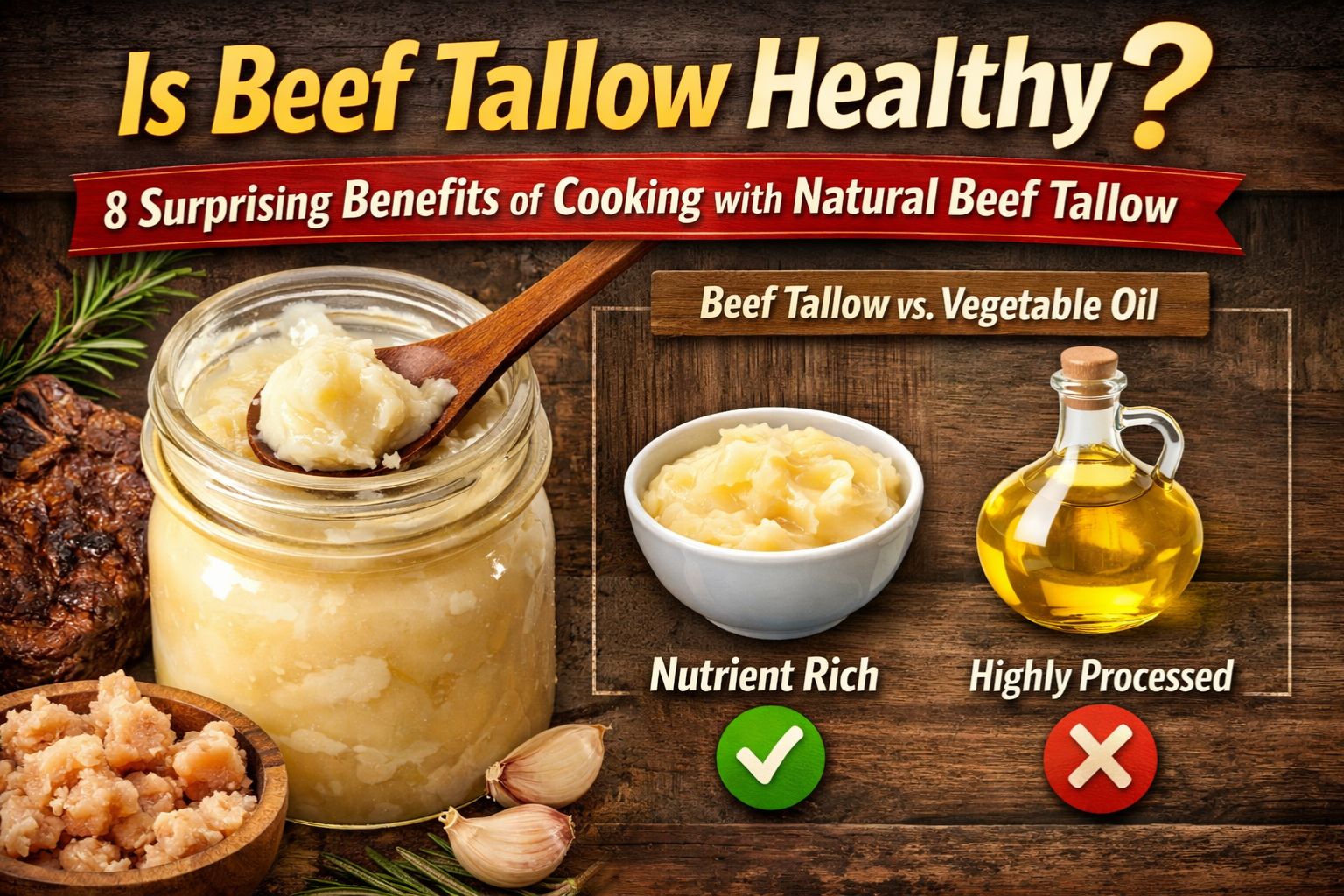
Surprisingly, the fatty acid profile of beef tallow is similar to olive oil. It contains approximately 40-50% oleic acid (a monounsaturated fat), scientifically shown to benefit heart health.Visual Comparison: Beef Tallow vs. Soybean Oil
To visualize the difference, here is a comparison between natural beef tallow and the most common vegetable oil used in the US:| Feature | Beef Tallow | Soybean Oil |
|---|---|---|
| Origin | Natural animal fat (rendered suet) | Plant seed (chemically extracted) |
| Smoke Point | High (~400°F – 480°F) | Medium (~450°F) but unstable |
| Oxidative Stability | Very High (Resists rancidity) | Low (Prone to oxidation/toxins) |
| Trans Fats | 0% (Naturally trans-fat free) | Often present (if partially hydrogenated) |
| Omega-6 Content | Low (Low inflammatory risk) | Very High (Risk of chronic inflammation) |
| Natural Vitamins | A, D, E, K | Few, or lost during refining |
Part 2: Safety & Purity (Benefits 4-5)
A cooking oil's health benefit lies not only in its raw nutritional content but in how it transforms under high heat.4. High Smoke Point Prevents Toxins
Beef tallow has a very high smoke point (~400°F+). This is critical for safety:- Prevents Oxidation: When oil exceeds its smoke point, it oxidizes and releases cell-damaging free radicals. Beef tallow withstands extreme heat, keeping its molecular structure stable.
- Prevents Polymerization: Vegetable oils often degrade into a sticky residue (polymerization). Tallow minimizes this, ensuring a clean cooking process.
5. Minimally Processed Whole Food
Vegetable oils typically undergo harsh processing: high-heat pressing, chemical deodorizing, and bleaching. In contrast, beef tallow is produced simply by rendering suet (beef fat) at low temperatures to separate impurities. It is a true “Whole Food”: chemical-free and non-GMO.Part 3: Culinary & Economic Advantages (Benefits 6-8)
Beyond health, beef tallow offers superior economic benefits and culinary experiences, explaining why many restaurants are returning to it.6. Superior Taste and Texture
- Crispiness: Tallow gives fried foods a crunchier texture that vegetable oils struggle to replicate.
- Non-Greasy: Foods fried in tallow typically have a “dry,” non-greasy finish as the fat doesn't seep aggressively into the food.
- Umami: It enhances natural flavors rather than overpowering them.
7. Extended Fry Life
Beef tallow has a fry life up to 50% longer than standard vegetable oils. Its thermal stability prevents rapid breakdown, saving restaurants and home cooks significantly on oil costs.8. Eco-Friendly & Sustainable
Beef tallow is a byproduct of the cattle industry (supporting the “nose-to-tail” philosophy). Using tallow is sustainable, reduces waste, and is fully biodegradable compared to industrially farmed oil crops.⚠️ Important Note on Balance
While the answer to “Is beef tallow healthy” is a yes, we must remain objective. Beef tallow is a calorie-dense fat (9 calories per gram).- Use it as part of a balanced diet.
- Pair it with leafy greens and fiber-rich foods to optimize digestion.
- Individuals with specific medical conditions regarding fat metabolism should consult a doctor before making significant dietary changes.
Conclusion
Revisiting the question “Is beef tallow healthy?”, both science and culinary history offer a resounding yes. With natural vitamins, robust heat stability, and no toxic artificial trans fats, beef tallow is a healthier, safer, and tastier alternative to processed oils. Are you ready to upgrade your kitchen? Don't let old stigmas stop you.- Take Action: Swap your regular cooking oil for a jar of high-quality beef tallow (preferably grass-fed) for your next batch of french fries or steak.
- Experience It: The difference in taste and the “light” feeling after eating is the most convincing answer.